


The Open Door Approach
Knowing what’s out there is step one. But knowledge doesn’t protect your kid. Your relationship does.
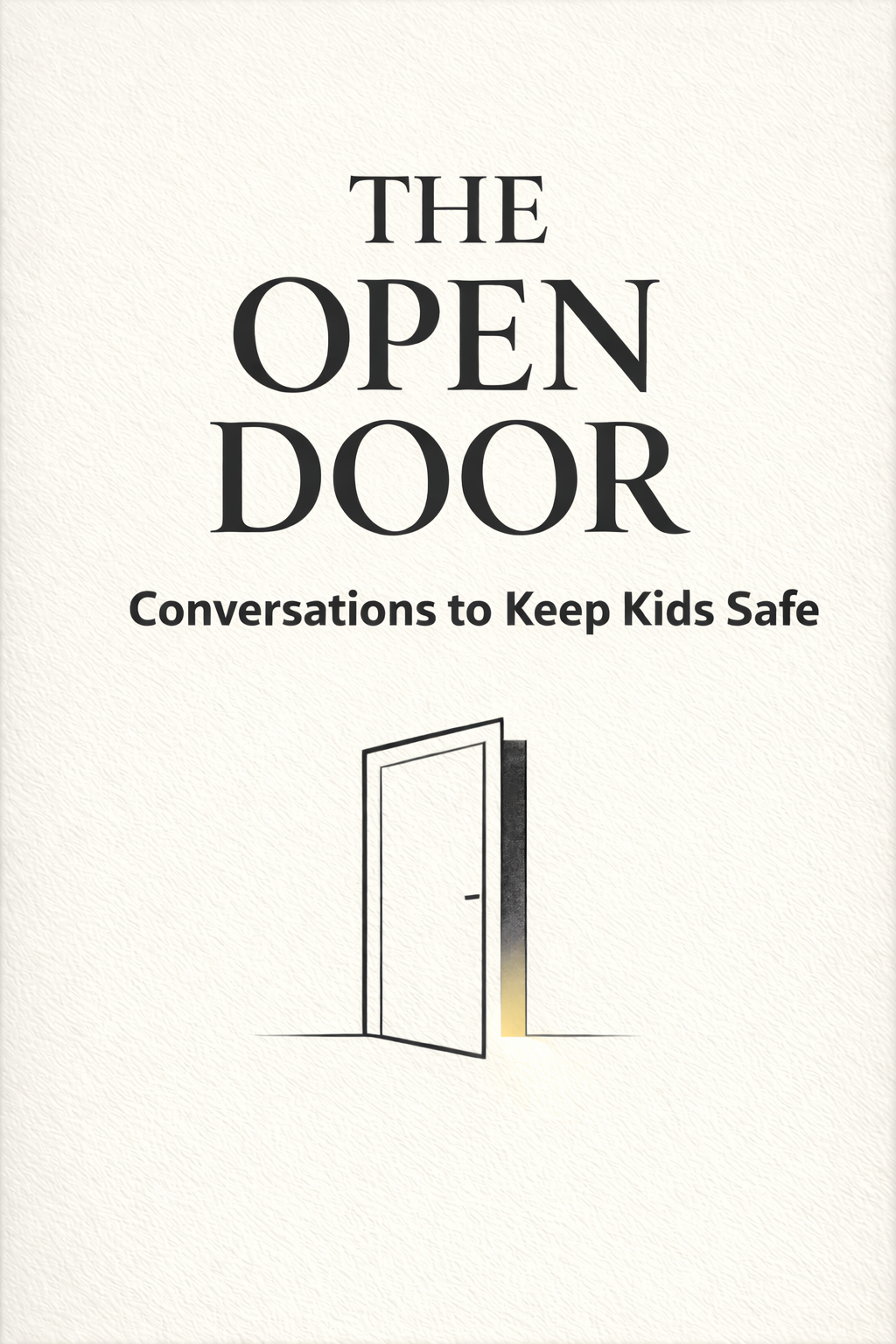
The Open Door is a relationship first approach to online safety for kids ages 7–12. Your child learns a trained reflex: Spot It. Leave It. Tell It. You learn how to build the kind of trust where coming to you feels safer than staying silent.
The relationship becomes the protection.
Why I Created This
My daughter found disturbing content buried in kids’ videos. A stranger started testing boundaries in a game she played. Both times, she came to me.
That wasn’t luck. That was years of building exactly the kind of relationship this book teaches.
I didn’t yell. I didn’t take her device. I didn’t interrogate her. And because of that, she kept coming back. Every time something felt off — she came back.
Most kids don’t. Over 70% of children who experience something harmful online never tell a parent. Not because they don’t love their parents. Because they’re afraid of what happens when they do.
They’re afraid you’ll take their phone. They’re afraid you’ll freak out. They’re afraid you’ll say something that makes them feel ashamed or like it was their fault. They’re afraid of the look on your face.
And here’s the gut punch: they learned that fear from you.
Not from some predator. Not from the internet. From the way you reacted the last time they told you something small. From the time you lost it over a broken rule. From the tone in your voice when you said “let me see your phone.”
So when the big moment comes, and it will come, they won’t run to you. They’ll hide it. They’ll handle it alone. They’ll bury it so deep you won’t find it for months. Maybe years. Maybe never.
The Open Door Approach fixes that. Not with monitoring software. Not with a single awkward conversation. With a system that changes how your child sees you — so that telling you feels safer than staying silent.
What’s Inside?
The Open Door approach is organized into four parts, each designed to handle a different situation parents actually deal with. Together, they build trust, teach clear responses, and make talking to you the natural choice when something comes up.
Part 1: The Foundation
Would your child come to you if something happened online tonight? Most parents say yes. Most kids say no. This part closes that gap and rebuilds you into the parent they actually trust, talk to, and run to when it matters.
Part 2: The System
When the moment comes, you won’t be there. Your child will be alone. The only thing protecting them is what you gave them beforehand. This is where you give it to them. Three steps. Rehearsed until automatic. Learned over a weekend.
Part 3: The Conversations
Sooner or later your kid is going to walk up to you and say something that stops you cold. What you say in that moment matters more than anything you’ve said before. This part gives you the exact conversations that help. Not the reactions that make it worse.
Part 4: If It Happens
Your child tells you something that makes your stomach drop. You have about 60 seconds before your reaction either keeps that door open or slams it shut for good. This part gives you the crisis protocols, the exact first words to say, and how to rebuild trust if you’ve already blown it.
What Changes After You Read This
You stop being the parent your kid hides things from.
Right now, over 70% of kids who face something harmful online never tell a parent. This book rewires that. Not with surveillance. With the kind of relationship where telling you feels safer than staying quiet.
Your kid gets a trained response that works when their brain freezes.
Kids don’t think clearly under pressure. They freeze, comply, or stay silent. The Spot It. Leave It. Tell It. approach bypasses all of that. Three steps. Rehearsed. Automatic. You teach it over a weekend.
It works on every platform, every device. Even the ones you can’t control.
Apps change. Parental controls have limits. Your kid will be on someone else’s phone, at a sleepover, or on a device you’ve never seen. What travels with them isn’t software. It’s what you’ve taught them.
Building the Kind of Relationship That Keeps Kids Safe
The Open Door is a relationship-first approach to online safety for kids ages 7–12. Your child learns a trained reflex: Spot It. Leave It. Tell It. You learn how to build the kind of trust where coming to you feels safer than staying silent. The relationship becomes the protection.
This isn’t theory. My daughter found disturbing content buried in kids’ videos. A stranger started testing boundaries in a game she played. Both times, she came to me. That wasn’t luck — that was years of building exactly the kind of relationship this book teaches.
Frequently Asked Questions
“My kid is only 7. Isn’t this too early?”
Seven is exactly when to start. They’re concrete thinkers who respond well to clear rules and rehearsed responses. The book adjusts for age. Starting now means the foundation is built before the hard years arrive.
“I already use parental controls.”
Good. Keep them. But controls reduce access. They don’t reduce manipulation. They can’t stop a groomer who’s already earned your child’s trust inside a game you approved. And they stop working entirely the day your child is on someone else’s device.
“This seems like a lot.”
Part 1 and Part 2 take a weekend. By Monday you’ll have a working foundation and a trained drill. Parts 3 and 4 are there when you need them. You don’t do everything at once. You just start.