

How Online Predators Target Your Child and What You Can Do Right Now
Online predators don’t look the way you think they do. They don’t lurk in some dark corner of the internet waiting to pounce. They’re in the same games your kid plays every night. The same apps. The same group chats.
And they’re patient.
A predator will spend weeks talking to your child about nothing. About the game. About school. About whatever your kid is going through. Before they ever cross a line. By the time they do, your child already trusts them.
That’s what online grooming looks like. And most parents don’t catch it until something has already gone wrong.
This free guide breaks down every step of how online predators target children, the exact signs of grooming to watch for, and what actually works to protect your child before it’s too late.
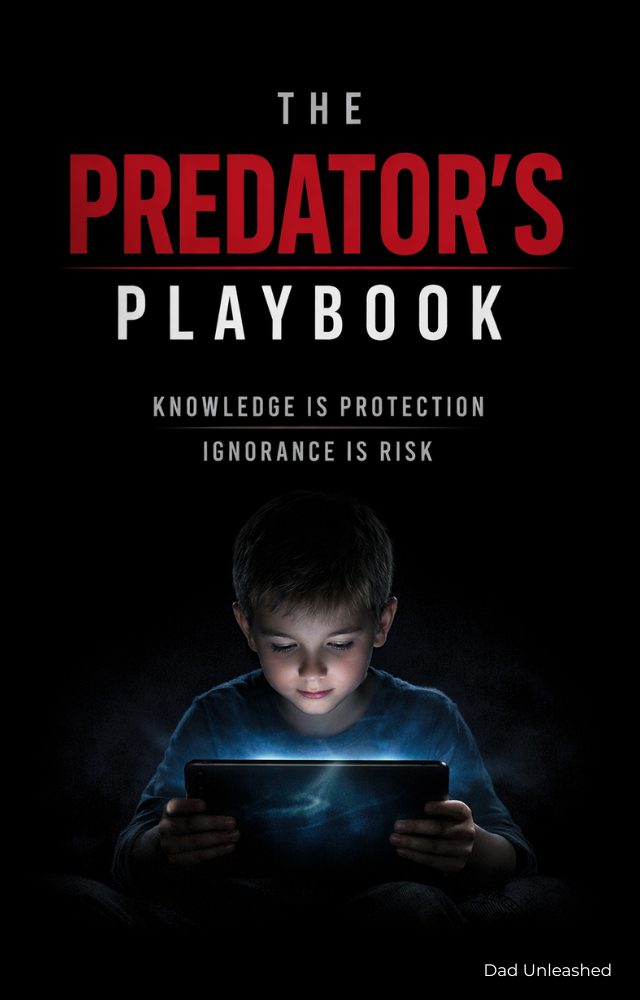
The Predator’s Playbook: Knowledge is Protection
Parenting blogs give you tips. I give you the predator’s actual playbook, how they find your kid, how they test them, and how they win their trust before you ever notice.
I put it all in this free guide. Everything you thought you knew about keeping your kid safe online is wrong, and this will show you why.
No Email Required
What This Guide Covers
You’ll learn how a predator picks your child out of a crowded game lobby and starts a conversation that feels completely normal. You’ll see the exact words they use to make your kid feel understood, special, like someone finally gets them. And you’ll understand why your child doesn’t tell you about it, even when part of them knows something is off.
This guide shows you what happens when that conversation moves to an app you’ve never heard of. What the grooming looks like when it shifts from friendly to sexual. And the specific moment most children go silent, not because they don’t trust you, but because they’re already in too deep and they’re terrified of what happens next.
You’ll walk away knowing the warning signs that don’t look like warning signs. The behavioral changes you’d normally brush off. And exactly how this plays out from first contact to full control, so you can spot it before it’s too late.
Everything in this guide comes from how predators actually operate. Not the sanitized version. The real one.
Who This Is For
Parents of kids ages 7 to 12 who want to understand how online predators actually operate. Not the pamphlet version. Not “just monitor screen time.” The real mechanics, the ones that explain why smart, loved kids still get targeted.
Teachers, school counselors, coaches, and youth leaders who need a resource they can hand to families when the topic of online safety comes up. This guide is non-graphic, action-focused, and designed to be shared freely.
What Parents Usually Miss
The mistake most parents make is checking their child’s phone. Predators have already moved the conversation to a platform the parent doesn’t know exists. Your kid’s phone looks clean. The real conversations are happening somewhere else.
Parents assume predators are strangers who send creepy messages out of nowhere. That’s not how it works anymore. A predator builds a real friendship first. Your child genuinely likes this person. They’ve been talking for weeks. By the time the predator tests a boundary, your child feels loyal to them. They don’t want to get their “friend” in trouble.
Most parents think they’d notice if something was wrong. But the signs of grooming don’t look like warning signs. A child who’s being groomed often seems happier at first. More engaged. More interested in their device, sure, but not in a way that raises an alarm. The secrecy comes later. And by then, the child has already been told what will happen if they tell anyone.
Your child’s age isn’t the protection you think it is. Predators target kids as young as 7 in game chats. They don’t care about age verification screens. And a 9-year-old who just wants a friend in Roblox doesn’t know they’re talking to a 34-year-old.
Frequently Asked Questions
Is this guide free? Yes. Completely free. No email required, no account, no catch. Download the PDF instantly.
Is it appropriate for schools to share? Yes. It doesn’t contain explicit images or graphic descriptions. It focuses on behavior patterns, warning signs, and what parents can do. The content is direct and honest about how predators operate, but it’s written for adult readers, not children.
What ages is this for? Parents of kids 7 to 12. That’s the window where children start interacting online independently but don’t have the social awareness to recognize grooming tactics.
What if something is already happening? The guide covers what to do if you suspect your child is being groomed. Don’t confront the child aggressively or seize their device, that can destroy evidence and shut down communication. The guide walks you through the steps.
Can I share this on my website or resource page? Yes. You’re encouraged to. Link to this page, embed the download, or copy one of the share blurbs above. No permission needed.
The Predator’s Playbook: Knowledge is Protection
Parenting blogs give you tips. I give you the predator’s actual playbook, how they find your kid, how they test them, and how they win their trust before you ever notice.
I put it all in this free guide. Everything you thought you knew about keeping your kid safe online is wrong, and this will show you why.
No Email Required
Dad Unleashed is a free public-safety resource for parents of kids ages 7 to 12. Built to explain what’s happening online, what parents miss, and what to do about it. All content focuses on safety behavior, prevention, and parent-child communication. No graphic material.
Online threats change fast. Sign up for the Dad Unleashed newsletter to stay current as platforms change and new tactics emerge.